
Rubicon SPARKLING PASSION MADE WITH REAL FRUIT JUI
Health
Nutrition
Nutri-Score
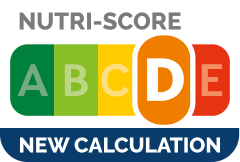 Lower nutritional quality
Nutri-Score data warning
Nutrient levels
Fat in low quantity (0%)
Saturated fat in low quantity (0%)
Sugars in moderate quantity (4.6%)
Salt in low quantity (0.1%)
Nutrition label

Nutrition facts
| Nutrition facts | As sold for 100 g / 100 ml | Compared to: Artificially sweetened beverages |
|---|---|---|
| Energy | ~ 78.2 kJ (20 kcal) | 44.604 kJ (11 kcal) (+75%) |
| Fat | 0 g | 0.037 g (-100%) |
| Saturated fat | 0 g | 0.009 g (-100%) |
| Carbohydrates | 4.6 g | 2.268 g (+103%) |
| Sugars | 4.6 g | 2.009 g (+129%) |
| Dietary fiber | ? | ? |
| Proteins | 0 g | 0.062 g (-100%) |
| Salt | 0.1 g | 0.043 g (+133%) |
| Sodium | 0.04 g | 0.017 g (+135%) |
| Fruits, vegetables and legumes | ~ 4 % | ? |
Nutrition facts (Detailed data)
| Nutrition facts | As sold for 100 g / 100 ml | As sold Per 100 g (packaging) | As sold Per 100 g (estimate) |
|---|---|---|---|
| Energy | ~ 78.2 kJ (20 kcal) | ? (20 kcal) | ? |
| Fat | 0 g | 0 g | ? |
| Saturated fat | 0 g | 0 g | ? |
| Carbohydrates | 4.6 g | 4.6 g | ? |
| Sugars | 4.6 g | 4.6 g | ? |
| Dietary fiber | ? | ? | ? |
| Proteins | 0 g | 0 g | ? |
| Salt | 0.1 g | 0.1 g | ? |
| Sodium | 0.04 g | 0.04 g | ? |
| Fruits, vegetables and legumes | ~ 4 % | ? | ~ 4 % |
Ingredients
Ingredients image

Ingredients list
Ingredient information
Added sugars
Ingredients analysis
Palm oil content unknown
Vegan status unknown
Unrecognized: en:s-rubicon-is-a-registered-trade-mark-owned-by-rubicon-drinks-limited-rubicon, en:a-g, en:barr-freepost-rthl-bcix-ekjc, en:milton-keynes-mk17-8fl, en:uk, en:a-g, en:barr, en:fitzwilliam-hall-fp, en:dublin, en:roi, en:d02-t292-please-recycle, en:our-cans-are-100-recyclable-ball-www-rubicondrinks-co-uk
Vegetarian status unknown
Unrecognized: en:s-rubicon-is-a-registered-trade-mark-owned-by-rubicon-drinks-limited-rubicon, en:a-g, en:barr-freepost-rthl-bcix-ekjc, en:milton-keynes-mk17-8fl, en:uk, en:a-g, en:barr, en:fitzwilliam-hall-fp, en:dublin, en:roi, en:d02-t292-please-recycle, en:our-cans-are-100-recyclable-ball-www-rubicondrinks-co-uk
Food Processing
NOVA group
 Ultra-processed food and drink products
Elements that indicate the product is in NOVA group 4
How NOVA works
Additives
E160a - caroteneColour
β-Carotene is an organic, strongly colored red-orange pigment abundant in plants and fruits. It is a member of the carotenes, which are terpenoids (isoprenoids), synthesized biochemically from eight isoprene units and thus having 40 carbons. Among the carotenes, β-carotene is distinguished by having beta-rings at both ends of the molecule. β-Carotene is biosynthesized from geranylgeranyl pyrophosphate.β-Carotene is the most common form of carotene in plants. When used as a food coloring, it has the E number E160a. The structure was deduced by Karrer et al. in 1930. In nature, β-carotene is a precursor (inactive form) to vitamin A via the action of beta-carotene 15,15'-monooxygenase.Isolation of β-carotene from fruits abundant in carotenoids is commonly done using column chromatography. It can also be extracted from the beta-carotene rich algae, Dunaliella salina. The separation of β-carotene from the mixture of other carotenoids is based on the polarity of a compound. β-Carotene is a non-polar compound, so it is separated with a non-polar solvent such as hexane. Being highly conjugated, it is deeply colored, and as a hydrocarbon lacking functional groups, it is very lipophilic.
E160ai - Beta-caroteneColour
No additive description is available yet.
E211 - Sodium benzoate EFSA overexposure risk: highPreservative
SODIUM BENZOATE is a substance which has the chemical formula NaC7H5O2
E296 - Malic acid
MALIC ACID is an organic compound with the molecular formula C4H6O5. Malic acid has two stereoisomeric forms (L- and D-enantiomers), though only the L-isomer exists naturally.
E418 - Gellan gumStabiliserThickener
GELLAN GUM is a water-soluble anionic polysaccharide produced by the bacterium Sphingomonas elodea. It is used in plant-based milks to keep plant protein suspended in the milk.
E440 - PectinsEmulsifierStabiliserThickener
Pectins (E440) are natural carbohydrates, predominantly found in fruits, that act as gelling agents in the food industry, creating the desirable jelly-like texture in jams, jellies, and marmalades.
Pectins stabilize and thicken various food products, such as desserts, confectioneries, and beverages, ensuring a uniform consistency and quality.
Recognized as safe by various health authorities, pectins have been widely used without notable adverse effects when consumed in typical dietary amounts.
E955 - SucraloseSweetener
Sucralose is an artificial sweetener and sugar substitute. The majority of ingested sucralose is not broken down by the body, so it is noncaloric. In the European Union, it is also known under the E number E955. It is produced by chlorination of sucrose. Sucralose is about 320 to 1,000 times sweeter than sucrose, three times as sweet as both aspartame and acesulfame potassium, and twice as sweet as sodium saccharin. Evidence of benefit is lacking for long-term weight loss with some data supporting weight gain and heart disease risks.It is stable under heat and over a broad range of pH conditions. Therefore, it can be used in baking or in products that require a long shelf life. The commercial success of sucralose-based products stems from its favorable comparison to other low-calorie sweeteners in terms of taste, stability, and safety. Common brand names of sucralose-based sweeteners are Splenda, Zerocal, Sukrana, SucraPlus, Candys, Cukren, and Nevella. Canderel Yellow also contains sucralose, but the original Canderel and Green Canderel do not.
Environment
Green-Score, origins bonus, and transportation impact are shown for Worldwide .
Green Score
Overall grade
 Unknown environmental impact
About Green-Score
Current scope
Green-Score availability
Bonuses and maluses
Declared origins
Packaging impact
Packaging

Packaging impact
Packaging components
| Shape | Material | Recycling | Impact |
|---|---|---|---|
| Food CAN | Heavy Aluminium | Unknown | Medium |
Declared packaging
Transportation
Declared origins
Forest footprint
Forest footprint
Deforestation risk details
Data Source
Product data comes from Open Food Facts. Food Benchmark also adds translations, category comparisons and explanatory calculations.
The database is licensed under ODbL 1.0, individual contents under DbCL 1.0, and product photos under CC BY-SA 3.0.
Product added on June 12, 2019 at 11:41:40 AM UTC by kiliweb .
Last edit on March 13, 2026 at 2:49:10 AM UTC by new-nutrition-bot .
Product page also edited by barri, new-nutrition-bot, roboto-app, scanbot, swipe-studio, yuka.WXBJR0tyWU5udWdHZ1BNWCtDN3kxNGxINHB5T2QwMk5BUHMzSVE9PQ.