ProductsHariboHaribo Starmix
Haribo Starmix
Barcode 5012035901738
Haribo

Haribo Starmix

BARCODE:5012035901738
CATEGORIES:Snacks, Sweet Snacks, Confectioneries, Candies
COUNTRIES:France

Health

Nutrition

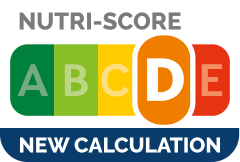
Nutri-Score

DLower nutritional quality

Nutri-Score data warning

Warning: the amount of fruits, vegetables and nuts is not specified on the label, it was estimated from the list of ingredients: 1

Nutrient levels

Fat in low quantity (0.5%)
What you need to know • A high consumption of fat, especially saturated fats, can raise cholesterol, which increases the risk of heart diseases. Recommendation: Limit the consumption of fat and saturated fat • Choose products with lower fat and saturated fat content. Source: National Health Service UK (NHS) - Fat: the facts
Saturated fat in low quantity (0.1%)
What you need to know • A high consumption of fat, especially saturated fats, can raise cholesterol, which increases the risk of heart diseases. Recommendation: Limit the consumption of fat and saturated fat • Choose products with lower fat and saturated fat content. Source: National Health Service UK (NHS) - Fat: the facts
Sugars in high quantity (47%)
What you need to know • A high consumption of sugar can cause weight gain and tooth decay. It also augments the risk of type 2 diabetes and cardio-vascular diseases. Recommendation: Limit the consumption of sugar and sugary drinks • Sugary drinks (such as sodas, fruit beverages, and fruit juices and nectars) should be limited as much as possible (no more than 1 glass a day). • Choose products with lower sugar content and reduce the consumption of products with added sugars. Source: National Health Service UK (NHS) - Sugar: the facts
Salt in low quantity (0.03%)
What you need to know • A high consumption of salt (or sodium) can cause raised blood pressure, which can increase the risk of heart disease and stroke. • Many people who have high blood pressure do not know it, as there are often no symptoms. • Most people consume too much salt (on average 9 to 12 grams per day), around twice the recommended maximum level of intake. Recommendation: Limit the consumption of salt and salted food • Reduce the quantity of salt used when cooking, and don't salt again at the table. • Limit the consumption of salty snacks and choose products with lower salt content. Source: World Health Organization (WHO) - Fact sheet - Salt reduction Source: National Health Service UK (NHS) - Salt: the facts

Nutrition label

Haribo Starmix nutrition label

Nutrition facts

Nutrition factsAs sold for 100 g / 100 mlCompared to: Candies
Energy~ 1439.7 kJ (342 kcal)1,498.452 kJ (350 kcal) (-4%)
Fat0.5 g1.573 g (-68%)
Saturated fat0.1 g0.879 g (-89%)
Carbohydrates77 g82.849 g (-7%)
Sugars47 g54.884 g (-14%)
Dietary fiber??
Proteins6.6 g2.159 g (+206%)
Salt0.03 g0.13 g (-77%)
Sodium0.012 g0.052 g (-77%)
Fruits, vegetables and legumes~ 0.773151232578755 %?

Nutrition facts (Detailed data)

Nutrition factsAs sold for 100 g / 100 mlAs sold Per 100 g (packaging)As sold Per 100 g (estimate)
Energy~ 1439.7 kJ (342 kcal)? (342 kcal)?
Fat0.5 g0.5 g?
Saturated fat0.1 g0.1 g?
Carbohydrates77 g77 g?
Sugars47 g47 g?
Dietary fiber???
Proteins6.6 g6.6 g?
Salt0.03 g0.03 g?
Sodium0.012 g0.012 g?
Fruits, vegetables and legumes~ 0.773151232578755 %?~ 0.773151232578755 %

Ingredients

Ingredients image

Haribo Starmix ingredients image

Ingredients list

RO WITHOUT ARTIFICIAL COLOURS HARL C Home Cale art Nährwerte Voedingswaarde Informations nutritionnelles Energie/Energie/Energie: per 100 g pour 100 g) pro 100 g Ri* per portie (25 g) RI* par portion (25 g) R pro Portion (25 g) 1452 kJ/ it

Ingredient information

Glucose Syrup
51.52% (estimate)
Sugar
23.5% (estimate)
Water
12.49% (estimate)
E428
6.25% (estimate)
Dextrose
3.12% (estimate)
Acid
1.56% (estimate)
E330
1.56% (estimate)
Sunflower Oil
0.78% (estimate)
Fruit Juice From Concentrate
0.39% (estimate)
Apple
0.39% (estimate)
Orange
0.2% (estimate)
Lemon
0.1% (estimate)
Strawberry
0.05% (estimate)
Raspberry
0.02% (estimate)
Pineapple
0.01% (estimate)
Flavouring
0.01% (estimate)
Fruit Concentrate
0% (estimate)
Safflower
0% (estimate)
Spirulina
0% (estimate)
Apple
0% (estimate)
Kiwi
0% (estimate)
Blackcurrant
0% (estimate)
Elderberry
0% (estimate)
Chokeberry
0% (estimate)
Grape
0% (estimate)
Orange
0% (estimate)
Lemon
0% (estimate)
Mango
0% (estimate)
Passionfruit
0% (estimate)
Radish
0% (estimate)
Sweet Potato
0% (estimate)
Carrot
0% (estimate)
Roselle Flower
0% (estimate)
Elderberry Extract
0% (estimate)
Caramel Syrup
0% (estimate)
E901
0% (estimate)

Added sugars

Contains added sugars (78%) Added sugars: glucose syrup, sugar, dextrose Quantity of added sugars: 78%

Allergens

KiwiOrange

Ingredients analysis

Palm oil free
Yes

No ingredients containing palm oil.

Vegan
No

Contains non-vegan ingredients.

Unrecognized: en:caramel-syrup

Vegetarian
No

Contains non-vegetarian ingredients.

Unrecognized: en:caramel-syrup


Food Processing

NOVA group

4Ultra-processed food and drink products

Elements that indicate the product is in NOVA group 4

Additives
E428 - Gelatine
Additives
E901 - white and yellow beeswax
Ingredients
Dextrose
Ingredients
Flavouring
Ingredients
Glucose
Ingredients
Glucose Syrup
Ingredients
Fruit Juice Concentrate

How NOVA works

The NOVA classification assigns food products into 4 groups based on their degree of processing: 1. Unprocessed or minimally processed foods 2. Processed culinary ingredients 3. Processed foods 4. Ultra-processed food and drink products

Additives

E330 - Citric acidAntioxidantSequestrant

Citric acid is a natural organic acid found in citrus fruits such as lemons, oranges, and limes.

It is widely used in the food industry as a flavor enhancer, acidulant, and preservative due to its tart and refreshing taste.

Citric acid is safe for consumption when used in moderation and is considered a generally recognized as safe (GRAS) food additive by regulatory agencies worldwide.

E428 - Gelatine

No additive description is available yet.

E901 - white and yellow beeswaxCarrierEmulsifierStabiliserThickener

Beeswax (cera alba) is a natural wax produced by honey bees of the genus Apis. The wax is formed into "scales" by eight wax-producing glands in the abdominal segments of worker bees, which discard it in or at the hive. The hive workers collect and use it to form cells for honey storage and larval and pupal protection within the beehive. Chemically, beeswax consists mainly of esters of fatty acids and various long-chain alcohols. Beeswax has long-standing applications in human food and flavoring. For example, it is used as a glazing agent or as a light/heat source. It is edible, in the sense of having similar negligible toxicity to plant waxes, and is approved for food use in most countries and the European Union under the E number E901. However, the wax monoesters in beeswax are poorly hydrolysed in the guts of humans and other mammals, so they have insignificant nutritional value. Some birds, such as honeyguides, can digest beeswax. Beeswax is the main diet of wax moth larvae.

Environment

Green-Score, origins bonus, and transportation impact are shown for Worldwide .

Green Score

Overall grade

BLow environmental impact

About Green-Score

The Green-Score is an experimental score that summarizes the environmental impacts of food products.

Current scope

The Green-Score was initially developed for France and it is being extended to other European countries. The Green-Score formula is subject to change as it is regularly improved to make it more precise and better suited to each country. Select a country to include the full impact of transportation in the final score.

Life cycle analysis

Average impact of the category

ACandies, all types • Score: 88/100

Life-cycle reference

Category: Candies, all types PEF environmental score: 0.21 Climate change impact: 1.41 kg CO2 eq / kg product The overall environmental impact figure (PEF) comes from ADEME's Agribalyse database, for the category: Candies, all types. Source: ADEME Agribalyse Database.

Overall environmental impact by stage (PEF)

The overall environmental impact figure (PEF) comes from ADEME's Agribalyse database, for the category: Candies, all types. Source: ADEME Agribalyse Database.

StageImpact
Agriculture47.6 %
Processing28.1 %
Packaging17.3 %
Transportation4.5 %
Distribution2.3 %
Consumption0.0 %

Bonuses and maluses

Declared origins

Origins of ingredients are missing for this product. Ingredients need to be completed before the transportation bonus can be computed precisely.

Packaging impact

Packaging with a high impact Malus: -15 The information about the packaging of this product is not filled in.

Green-Score for this product

Green-Score for this product

BFinal score: 68/100

Final score breakdown

Life cycle analysis score: 88 Sum of bonuses and maluses: -20 Final score: 68/100

Carbon footprint

Carbon footprint

Equivalent to driving 0.7 km in a petrol car. 141 g CO2e per 100g of product. Reference category: Candies, all types. The carbon emission figure comes from ADEME's Agribalyse database, for the category: Candies, all types. Source: ADEME Agribalyse Database.

Climate impact by stage (CO2e)

The carbon emission figure comes from ADEME's Agribalyse database, for the category: Candies, all types. Source: ADEME Agribalyse Database.

StageImpact
Agriculture46.7 %
Processing27.1 %
Packaging16.4 %
Transportation8.7 %
Distribution1.5 %
Consumption0.0 %

Packaging

Haribo Starmix packaging image

Packaging impact

Packaging with a high impact Malus: -15 The information about the packaging of this product is not filled in.

Data precision

The packaging information is not sufficiently precise to compute the most accurate packaging impact. Exact shapes and materials of all packaging components help improve the Green-Score.

Transportation

Declared origins

Origins of ingredients are missing for this product. Ingredients need to be completed before the transportation bonus can be computed precisely.

Forest footprint

Forest footprint

No deforestation risk No ingredient associated with a deforestation risk. Forest Footprint The Forest Footprint is a methodology developed by the association Envol Vert to estimate the risk of deforestation related to our consumption. → More information on the methodology Forest Footprint grade: A No ingredient associated with a deforestation risk. Total Forest Footprint: 0.000 m² per kg of food

Deforestation risk details

Labels The presence of certain labels can greatly help reduce the risk of deforestation, through the presence of environmental criteria and/or through better remuneration of producers.

Data Source

Product data comes from Open Food Facts. Food Benchmark also adds translations, category comparisons and explanatory calculations.

The database is licensed under ODbL 1.0, individual contents under DbCL 1.0, and product photos under CC BY-SA 3.0.

Product added on March 28, 2018 at 3:10:53 PM UTC by kiliweb .

Last edit on March 11, 2026 at 8:06:09 PM UTC by floreg .

Product page also edited by autorotate-bot, barri, floreg, foodless, halal-app-chakib, halal-food, kiliweb, openfoodfacts-contributors, remi-sim, roboto-app, teolemon, yuka.AZN9LfiUIscrOt3Sjbhu_iK8C9a4H9FwFEwQoQ, yuka.YTRJTURvSU91dGNxdWRzVHcwclYzdlZ4L3IrRmYzT0hETnMrSUE9PQ.