

Suma Japanese Rice Crackers
Health
Nutrition
Nutri-Score
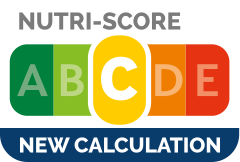 Average nutritional quality
Nutri-Score data warning
Nutrient levels
Fat in low quantity (0.9%)
Saturated fat in low quantity (0.2%)
Sugars in low quantity (2.2%)
Salt in moderate quantity (1.2%)
Nutrition facts
| Nutrition facts | As sold for 100 g / 100 ml | Compared to: Crackers (Appetizers) |
|---|---|---|
| Energy | 1578 kJ (377 kcal) | 1,900.696 kJ (453 kcal) (-17%) |
| Fat | 0.9 g | 17.336 g (-95%) |
| Saturated fat | 0.2 g | 4.342 g (-95%) |
| Carbohydrates | 82.8 g | 61.698 g (+34%) |
| Sugars | 2.2 g | 3.876 g (-43%) |
| Dietary fiber | 0.8 g | ? |
| Proteins | 9.1 g | 9.733 g (-7%) |
| Salt | 1.2 g | 1.85 g (-35%) |
| Sodium | 0.48 g | 0.738 g (-35%) |
| Alcohol | 0 % vol | ? |
| Fruits, vegetables and legumes | ? | ? |
Nutrition facts (Detailed data)
| Nutrition facts | As sold for 100 g / 100 ml | As sold Per serving (legacy) |
|---|---|---|
| Energy | 1578 kJ (377 kcal) | 1580 kJ (377 kcal) |
| Fat | 0.9 g | 0.9 g |
| Saturated fat | 0.2 g | 0.2 g |
| Carbohydrates | 82.8 g | 82.8 g |
| Sugars | 2.2 g | 2.2 g |
| Dietary fiber | 0.8 g | 0.8 g |
| Proteins | 9.1 g | 9.1 g |
| Salt | 1.2 g | 1.2 g |
| Sodium | 0.48 g | 0.48 g |
| Alcohol | 0 % vol | 0 % vol |
| Fruits, vegetables and legumes | ? | ? |
Serving size
Ingredients
Ingredients list
Ingredient information
Added sugars
Allergens
Traces
Ingredients analysis
No ingredients containing palm oil.
Unrecognized: en:aosa
Vegan status unknown
Unrecognized: en:aosa
No non-vegetarian ingredients.
Unrecognized: en:aosa
Food Processing
NOVA group
 Ultra-processed food and drink products
Elements that indicate the product is in NOVA group 4
How NOVA works
Additives
E100 - CurcuminColour
No additive description is available yet.
E140 - Chlorophylls and ChlorophyllinsColour
CHLOROPHYLL is any of several related green pigments found in cyanobacteria and the chloroplasts of algae and plants. Chefs use chlorophyll to color a variety of foods and beverages green, such as pasta and spirits.
E150a - Plain caramel EFSA overexposure risk: noColour
Caramel color or caramel coloring is a water-soluble food coloring.
E160c - Paprika extractColour
No additive description is available yet.
E162 - Beetroot redColour
Betanin, or Beetroot Red, is a red glycosidic food dye obtained from beets; its aglycone, obtained by hydrolyzing away the glucose molecule, is betanidin. As a food additive, its E number is E162. The color of betanin depends on pH; between four and five it is bright bluish-red, becoming blue-violet as the pH increases. Once the pH reaches alkaline levels betanin degrades by hydrolysis, resulting in a yellow-brown color. Betanin is a betalain pigment, together with isobetanin, probetanin, and neobetanin. Other pigments contained in beet are indicaxanthin and vulgaxanthins.
Environment
Green-Score, origins bonus, and transportation impact are shown for Worldwide .
Green Score
Overall grade
 Low environmental impact
About Green-Score
Current scope
Life cycle analysis
Average impact of the category
 Salty snacks, crackers, plain • Score: 87/100
Life-cycle reference
Overall environmental impact by stage (PEF)
The overall environmental impact figure (PEF) comes from ADEME's Agribalyse database, for the category: Salty snacks, crackers, plain. Source: ADEME Agribalyse Database.
| Stage | Impact |
|---|---|
| Agriculture | 59.1 % |
| Processing | 22.7 % |
| Packaging | 10.8 % |
| Transportation | 5.3 % |
| Distribution | 2.2 % |
| Consumption | 0.0 % |
Bonuses and maluses
Declared origins
Packaging impact
Green-Score for this product
Green-Score for this product
Final score: 72/100Final score breakdown
Carbon footprint
Carbon footprint
Climate impact by stage (CO2e)
The carbon emission figure comes from ADEME's Agribalyse database, for the category: Salty snacks, crackers, plain. Source: ADEME Agribalyse Database.
| Stage | Impact |
|---|---|
| Agriculture | 53.6 % |
| Processing | 18.8 % |
| Packaging | 17.7 % |
| Transportation | 8.7 % |
| Distribution | 1.2 % |
| Consumption | 0.0 % |
Packaging
Packaging impact
Packaging components
| Shape | Material | Recycling | Impact |
|---|---|---|---|
| BAG | Plastic | Unknown | High |
Declared packaging
Transportation
Manufacturing locations
Declared origins
Data Source
Product data comes from Open Food Facts. Food Benchmark also adds translations, category comparisons and explanatory calculations.
The database is licensed under ODbL 1.0, individual contents under DbCL 1.0, and product photos under CC BY-SA 3.0.
Product added on July 2, 2017 at 11:35:11 PM UTC by jm0804 .
Last edit on March 20, 2025 at 5:56:51 AM UTC by bot-tags-and-languages .
Product page also edited by bot-tags-and-languages, jm0804, openfoodfacts-contributors, packbot.