ProductsMaltesersPâte à tartiner MALTESERS® 200g
Pâte à tartiner MALTESERS® 200g
Barcode 5060122039321
Maltesers, Mars, Mars Chocolat

Pâte à tartiner MALTESERS® 200g

200 g
BARCODE:5060122039321
COMMON NAME:Pâte à tartiner au cacao maigre avec des billes croustillantes maltées
CATEGORIES:Breakfasts, Spreads, Sweet Spreads, Pates A Tartiner, Chocolate Spreads
LABELS:Vegetarian, Green Dot
PACKAGING:Glass
COUNTRIES:Austria, France, Germany, Switzerland
STORES:Edeka,Casino,Magasins U,denner

Health

Nutrition

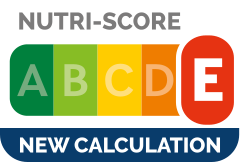
Nutri-Score

ELower nutritional quality

Nutri-Score data warning

Warning: the amount of fruits, vegetables and nuts is not specified on the label, it was estimated from the list of ingredients: 13

Nutrient levels

Fat in high quantity (32.2%)
What you need to know • A high consumption of fat, especially saturated fats, can raise cholesterol, which increases the risk of heart diseases. Recommendation: Limit the consumption of fat and saturated fat • Choose products with lower fat and saturated fat content. Source: National Health Service UK (NHS) - Fat: the facts
Saturated fat in high quantity (7.8%)
What you need to know • A high consumption of fat, especially saturated fats, can raise cholesterol, which increases the risk of heart diseases. Recommendation: Limit the consumption of fat and saturated fat • Choose products with lower fat and saturated fat content. Source: National Health Service UK (NHS) - Fat: the facts
Sugars in high quantity (54.4%)
What you need to know • A high consumption of sugar can cause weight gain and tooth decay. It also augments the risk of type 2 diabetes and cardio-vascular diseases. Recommendation: Limit the consumption of sugar and sugary drinks • Sugary drinks (such as sodas, fruit beverages, and fruit juices and nectars) should be limited as much as possible (no more than 1 glass a day). • Choose products with lower sugar content and reduce the consumption of products with added sugars. Source: National Health Service UK (NHS) - Sugar: the facts
Salt in low quantity (0.2%)
What you need to know • A high consumption of salt (or sodium) can cause raised blood pressure, which can increase the risk of heart disease and stroke. • Many people who have high blood pressure do not know it, as there are often no symptoms. • Most people consume too much salt (on average 9 to 12 grams per day), around twice the recommended maximum level of intake. Recommendation: Limit the consumption of salt and salted food • Reduce the quantity of salt used when cooking, and don't salt again at the table. • Limit the consumption of salty snacks and choose products with lower salt content. Source: World Health Organization (WHO) - Fact sheet - Salt reduction Source: National Health Service UK (NHS) - Salt: the facts

Nutrition label

Pâte à tartiner MALTESERS® 200g nutrition label

Nutrition facts

Nutrition factsAs sold for 100 g / 100 mlCompared to: Chocolate spreads
Energy~ 2259 kJ (546 kcal)2,272.785 kJ (545 kcal) (-1%)
Fat32.2 g34.371 g (-6%)
Saturated fat7.8 g7.383 g (+6%)
Carbohydrates58.1 g50.59 g (+15%)
Sugars54.4 g44.994 g (+21%)
Dietary fiber??
Proteins4.7 g6.418 g (-27%)
Salt0.2 g0.113 g (+77%)
Sodium0.08 g0.045 g (+78%)
Fruits, vegetables and legumes~ 0 %?

Nutrition facts (Detailed data)

Nutrition factsAs sold for 100 g / 100 mlAs sold Per 100 g (packaging)As sold Per 100 g (estimate)
Energy~ 2259 kJ (546 kcal)? (546 kcal)?
Fat32.2 g32.2 g?
Saturated fat7.8 g7.8 g?
Carbohydrates58.1 g58.1 g?
Sugars54.4 g54.4 g?
Dietary fiber???
Proteins4.7 g4.7 g?
Salt0.2 g0.2 g?
Sodium0.08 g0.08 g?
Fruits, vegetables and legumes~ 0 %?~ 0 %

Serving size

20g

Ingredients

Ingredients image

Pâte à tartiner MALTESERS® 200g ingredients image

Ingredients list

Sucre, huiles végétales (colza, palme), billes croustillantes maltées (9%) (sirop de glucose, extrait de malt d'orge, poudre de lait écrémé, graisse de palme, farine de blé, sucre, poudres à lever (E341, E500, E501) , gluten de blé, lactosérum en poudre (lait), sel, poudre de lait, cacao maigre en poudre (5,4 %), lactosérum en poudre (lait), émulsifiant : lécithines, arôme naturel de vanille.

Ingredient information

Sugar
50% (estimate)
Vegetable Oil
25% (estimate)
Colza Oil
12.5% (estimate)
Palm Oil
12.5% (estimate)
Billes Croustillantes Maltees
9.0%
Glucose Syrup
8% (estimate)
Barley Malt Extract
4% (estimate)
Skimmed Milk Powder
2% (estimate)
Palm Fat
1% (estimate)
Wheat Flour
0.5% (estimate)
Sugar
0.25% (estimate)
Raising Agent
0.13% (estimate)
E341
0.06% (estimate)
E500
0.03% (estimate)
E501
0.03% (estimate)
Wheat Gluten
0.06% (estimate)
Whey Powder
0.03% (estimate)
Salt
0.02% (estimate)
Milk Powder
0.01% (estimate)
Fat Reduced Cocoa Powder
5.4%

Added sugars

Contains added sugars (59%) Added sugars: sugar, glucose syrup Quantity of added sugars: 59%

Allergens

GlutenMilk

Traces

NutsSoybeans

Ingredients analysis

Palm oil free
No

Contains ingredients containing palm oil.

Vegan
No

Contains non-vegan ingredients.

Unrecognized: fr:billes-croustillantes-maltees

Vegetarian
Yes

No non-vegetarian ingredients.

Unrecognized: fr:billes-croustillantes-maltees


Food Processing

NOVA group

4Ultra-processed food and drink products

Elements that indicate the product is in NOVA group 4

Additives
E322 - Lecithins
Ingredients
Emulsifier
Ingredients
Flavouring
Ingredients
Glucose
Ingredients
Glucose Syrup
Ingredients
Gluten
Ingredients
Whey

How NOVA works

The NOVA classification assigns food products into 4 groups based on their degree of processing: 1. Unprocessed or minimally processed foods 2. Processed culinary ingredients 3. Processed foods 4. Ultra-processed food and drink products

Additives

E322 - LecithinsAntioxidantEmulsifier

Lecithins are natural compounds commonly used in the food industry as emulsifiers and stabilizers.

Extracted from sources like soybeans and eggs, lecithins consist of phospholipids that enhance the mixing of oil and water, ensuring smooth textures in various products like chocolates, dressings, and baked goods.

They do not present any known health risks.

E341 - Calcium phosphates EFSA overexposure risk: highEmulsifierHumectantSequestrantStabiliserThickener

Calcium phosphate is a family of materials and minerals containing calcium ions (Ca2+) together with inorganic phosphate anions. Some so-called calcium phosphates contain oxide and hydroxide as well. They are white solids of nutritious value.

E500 - Sodium carbonatesStabiliserThickener

Sodium carbonates (E500) are compounds commonly used in food preparation as leavening agents, helping baked goods rise by releasing carbon dioxide when they interact with acids.

Often found in baking soda, they regulate the pH of food, preventing it from becoming too acidic or too alkaline. In the culinary world, sodium carbonates can also enhance the texture and structure of foods, such as noodles, by modifying the gluten network.

Generally recognized as safe, sodium carbonates are non-toxic when consumed in typical amounts found in food.

E501 - Potassium carbonatesStabiliser

Potassium carbonate (K2CO3) is a white salt, which is soluble in water (insoluble in ethanol) and forms a strongly alkaline solution. It can be made as the product of potassium hydroxide's absorbent reaction with carbon dioxide. It is deliquescent, often appearing a damp or wet solid. Potassium carbonate is used in the production of soap and glass.

Environment

Green-Score, origins bonus, and transportation impact are shown for Worldwide .

Green Score

Overall grade

UnknownUnknown environmental impact

About Green-Score

The Green-Score is an experimental score that summarizes the environmental impacts of food products.

Current scope

The Green-Score was initially developed for France and it is being extended to other European countries. The Green-Score formula is subject to change as it is regularly improved to make it more precise and better suited to each country. Select a country to include the full impact of transportation in the final score.

Green-Score availability

We could not compute the Green-Score of this product because some data is missing. A more precise category, ingredients list, origins or packaging data can unlock the computation.

Bonuses and maluses

Declared origins

Origins of ingredients are missing for this product. Ingredients need to be completed before the transportation bonus can be computed precisely.

Threatened species risk

Contains ingredients that may threaten species or ecosystems, such as palm oil.

Packaging impact

Packaging with a low impact Malus: -2 Packaging score: +81

Packaging

Packaging impact

Packaging with a low impact Malus: -2 Packaging score: +81

Packaging components

ShapeMaterialRecyclingImpact
UnknownGlassUnknownLow

Declared packaging

Glass

Data precision

The packaging information is not sufficiently precise to compute the most accurate packaging impact. Exact shapes and materials of all packaging components help improve the Green-Score.

Transportation

Declared origins

Origins of ingredients are missing for this product. Ingredients need to be completed before the transportation bonus can be computed precisely.

Forest footprint

Forest footprint

Medium risk of deforestation Presence of one or more ingredients at risk of deforestation, with moderate risk given their quantity, origin and/or labels. Forest Footprint The Forest Footprint is a methodology developed by the association Envol Vert to estimate the risk of deforestation related to our consumption. → More information on the methodology Forest Footprint grade: C Presence of one or more ingredients at risk of deforestation, with moderate risk given their quantity, origin and/or labels. Total Forest Footprint: 0.019 m² per kg of food

Deforestation risk details

Cocoa Primary ingredient grade: B Primary ingredient: 0.016 m² per kg of food Cocoa production, concentrated mainly in West Africa, contributes significantly to deforestation. For example, Côte d'Ivoire, the leading cocoa-producing country, has lost 90% of its forests since the 1960s. Palm oil Primary ingredient grade: C Primary ingredient: 0.003 m² per kg of food Palm oil production, concentrated mainly in Indonesia and Malaysia, contributes significantly to deforestation. Borneo has lost more than half of its forests since the 1970s. Other risky ingredients These ingredients are not yet assessed for deforestation risk: skimmed milk powder whey powder milk powder whey powder Labels The presence of certain labels can greatly help reduce the risk of deforestation, through the presence of environmental criteria and/or through better remuneration of producers.

Data Source

Product data comes from Open Food Facts. Food Benchmark also adds translations, category comparisons and explanatory calculations.

The database is licensed under ODbL 1.0, individual contents under DbCL 1.0, and product photos under CC BY-SA 3.0.

Product added on April 2, 2017 at 5:28:56 PM UTC by openfoodfacts-contributors .

Last edit on March 14, 2026 at 11:09:02 AM UTC by new-nutrition-bot .

Product page also edited by anticultist, beniben, chiendroopy, date-limite-app, eatshalal, elttor, foodless, hangy, kiliweb, magasins-u, new-nutrition-bot, openfoodfacts-contributors, packbot, tacite, tacite-mass-editor, yuka.RzQwcks1MEhvNkU2bXYwZHJ3bU8yK2hxLzZPSlhHT1dFdG9xSVE9PQ, yuka.VEw4dUFmd1JyK2tUcXZFeTF6eldwdUo2bVlPWmRGanFKcnNSSWc9PQ, yuka.VGEwU0w0b211ZnNza2MwUjdqVFUydTlLKzRXVFkzaXBJcllVSVE9PQ, yuka.YXFCWUt2MGl1dm90eXNRQjFEYmYyZUp2eEpMelYwbUxCK2N0SVE9PQ, yuka.sY2b0xO6T85zoF3NwEKvllF8asiDumzebxXumU3a1IuTCbH3cddb4LrEM6g, yukafix.