

Yogur Delicias Pay de Limón Lala
Health
Nutrition
Nutri-Score
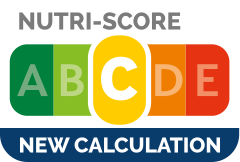 Average nutritional quality
Nutri-Score data warning
Nutrient levels
Fat in moderate quantity (6%)
Saturated fat in moderate quantity (3.53%)
Sugars in high quantity (16.5%)
Salt in low quantity (0.208%)
Nutrition label

Nutrition facts
| Nutrition facts | As sold for 100 g / 100 ml | Compared to: Yogurts |
|---|---|---|
| Energy | 646 kJ (153 kcal) | 362.733 kJ (86 kcal) (+78%) |
| Fat | 6 g | 2.733 g (+120%) |
| Saturated fat | 3.53333333333333 g | 1.718 g (+106%) |
| Carbohydrates | 21.5333333333333 g | 10.382 g (+107%) |
| Sugars | 16.5333333333333 g | 9.177 g (+80%) |
| Dietary fiber | 0 g | ? |
| Proteins | 3.4 g | 4.346 g (-22%) |
| Salt | 0.20828 g | 0.115 g (+81%) |
| Sodium | 0.083312 g | 0.046 g (+81%) |
| Calcium | 0.108 g | 119.733 mg (-10%) |
| Fruits, vegetables and legumes | ~ 15 % | ? |
Nutrition facts (Detailed data)
| Nutrition facts | As sold for 100 g / 100 ml | As sold Per serving (150 g) (packaging) | As sold Per 100 g (estimate) |
|---|---|---|---|
| Energy | 646 kJ (153 kcal) | 969 kJ (231 kcal) | ? |
| Fat | 6 g | 9 g | ? |
| Saturated fat | 3.53333333333333 g | 5.3 g | ? |
| Carbohydrates | 21.5333333333333 g | 32.3 g | ? |
| Sugars | 16.5333333333333 g | 24.8 g | ? |
| Dietary fiber | 0 g | 0 g | ? |
| Proteins | 3.4 g | 5.1 g | ? |
| Salt | 0.20828 g | 0.31242 g | ? |
| Sodium | 0.083312 g | 0.124968 g | ? |
| Calcium | 0.108 g | 0.162 g | ? |
| Fruits, vegetables and legumes | ~ 15 % | ? | ~ 15 % |
Serving size
Ingredients
Ingredients image

Ingredients list
Ingredient information
Added sugars
Allergens
Traces
Ingredients analysis
Palm oil content unknown
Contains non-vegan ingredients.
Unrecognized: es:verde-natural, es:grenewtina, es:3-4mg, es:saborizantes-artifiviales-y-naturales
Vegetarian status unknown
Unrecognized: es:verde-natural, es:grenewtina, es:3-4mg, es:saborizantes-artifiviales-y-naturales
Food Processing
NOVA group
 Ultra-processed food and drink products
Elements that indicate the product is in NOVA group 4
How NOVA works
Additives
E14XX - Modified StarchEmulsifierStabiliserThickener
No additive description is available yet.
E202 - Potassium sorbate EFSA overexposure risk: highPreservative
Potassium sorbate (E202) is a synthetic food preservative commonly used to extend the shelf life of various food products.
It works by inhibiting the growth of molds, yeast, and some bacteria, preventing spoilage. When added to foods, it helps maintain their freshness and quality.
Some studies have shown that when combined with nitrites, potassium sorbate have genotoxic activity in vitro. However, potassium sorbate is generally recognized as safe (GRAS) by regulatory authorities.
E440 - PectinsEmulsifierStabiliserThickener
Pectins (E440) are natural carbohydrates, predominantly found in fruits, that act as gelling agents in the food industry, creating the desirable jelly-like texture in jams, jellies, and marmalades.
Pectins stabilize and thicken various food products, such as desserts, confectioneries, and beverages, ensuring a uniform consistency and quality.
Recognized as safe by various health authorities, pectins have been widely used without notable adverse effects when consumed in typical dietary amounts.
E503 - Ammonium carbonates
AMMONIUM BICARBONATE is an inorganic compound with formula (NH4)HCO3, simplified to NH5CO3. Ammonium bicarbonate is used in the food industry as a raising agent for flat baked goods, such as cookies and crackers, and in China in steamed buns and Chinese almond cookies. It was commonly used in the home before modern day baking powder was made available.
E503ii - Ammonium hydrogen carbonate
No additive description is available yet.
E960 - Steviol glycosides EFSA overexposure risk: moderateSweetener
Steviol glycosides are the chemical compounds responsible for the sweet taste of the leaves of the South American plant Stevia rebaudiana (Asteraceae) and the main ingredients (or precursors) of many sweeteners marketed under the generic name stevia and several trade names. They also occur in the related species Stevia phlebophylla (but in no other species of Stevia) and in the plant Rubus chingii (Rosaceae).Steviol glycosides from Stevia rebaudiana have been reported to be between 30 and 320 times sweeter than sucrose, although there is some disagreement in the technical literature about these numbers. They are heat-stable, pH-stable, and do not ferment. Additionally, they do not induce a glycemic response when ingested, because humans can not metabolize stevia. This makes them attractive as natural sugar substitutes for diabetics and other people on carbohydrate-controlled diets. Steviol glycosides stimulate the insulin secretion through potentiation of the β-cell, preventing high blood glucose after a meal. The acceptable daily intake (ADI) for steviol glycosides, expressed as steviol equivalents, has been established to be 4 mg/kg body weight/day, and is based on no observed effects of a 100 fold higher dose in a rat study.
Environment
Green-Score, origins bonus, and transportation impact are shown for Worldwide .
Green Score
Overall grade
 Very low environmental impact
About Green-Score
Current scope
Life cycle analysis
Average impact of the category
 Yogurt, fermented milk or dairy specialty, plain • Score: 91/100
Life-cycle reference
Overall environmental impact by stage (PEF)
The overall environmental impact figure (PEF) comes from ADEME's Agribalyse database, for the category: Yogurt, fermented milk or dairy specialty, plain. Source: ADEME Agribalyse Database.
| Stage | Impact |
|---|---|
| Agriculture | 51.4 % |
| Processing | 15.5 % |
| Packaging | 17.2 % |
| Transportation | 9.6 % |
| Distribution | 4.9 % |
| Consumption | 1.4 % |
Bonuses and maluses
Origins of ingredients
Packaging impact
Green-Score for this product
Green-Score for this product
Final score: 78/100Final score breakdown
Carbon footprint
Carbon footprint
Climate impact by stage (CO2e)
The carbon emission figure comes from ADEME's Agribalyse database, for the category: Yogurt, fermented milk or dairy specialty, plain. Source: ADEME Agribalyse Database.
| Stage | Impact |
|---|---|
| Agriculture | 54.5 % |
| Processing | 8.0 % |
| Packaging | 22.3 % |
| Transportation | 13.1 % |
| Distribution | 2.0 % |
| Consumption | 0.4 % |
Packaging
Packaging impact
Packaging components
| Shape | Material | Recycling | Impact |
|---|---|---|---|
| POT | Plastic | Unknown | High |
Declared packaging
Transportation
Manufacturing locations
Origins of ingredients
Origins breakdown
| Origin | Percent of ingredients | Impact |
|---|---|---|
| Mexico | 100 % | High |
Data Source
Product data comes from Open Food Facts. Food Benchmark also adds translations, category comparisons and explanatory calculations.
The database is licensed under ODbL 1.0, individual contents under DbCL 1.0, and product photos under CC BY-SA 3.0.
Product added on November 27, 2018 at 4:49:25 PM UTC by openfoodfactsmx .
Last edit on March 12, 2026 at 2:54:45 PM UTC by new-nutrition-bot .
Product page also edited by new-nutrition-bot, openfoodfactsmx, packbot.