

Quaker Granola de Avena y Trigo
Health
Nutrition
Nutri-Score
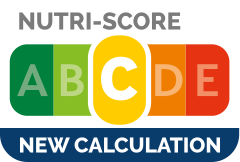 Average nutritional quality
Nutri-Score data warning
Nutrient levels
Fat in moderate quantity (5.75%)
Saturated fat in low quantity (1%)
Sugars in high quantity (27.2%)
Salt in moderate quantity (0.565%)
Nutrition label

Nutrition facts
| Nutrition facts | As sold for 100 g / 100 ml | Compared to: Cereals and their products |
|---|---|---|
| Energy | 1510 kJ (360 kcal) | 1,420.234 kJ (337 kcal) (+6%) |
| Fat | 5.75 g | 5.522 g (+4%) |
| Saturated fat | 1 g | 1.247 g (-20%) |
| Carbohydrates | 68.2 g | 57.306 g (+19%) |
| Sugars | 27.2 g | 5.32 g (+411%) |
| Dietary fiber | 9.75 g | ? |
| Proteins | 8.5 g | 9.381 g (-9%) |
| Salt | 0.565 mg | 0.512 g (-100%) |
| Sodium | 0.226 mg | 0.204 g (-100%) |
| Alcohol | 0 % vol | ? |
| Fruits, vegetables and legumes | ? | ? |
Nutrition facts (Detailed data)
| Nutrition facts | As sold for 100 g / 100 ml | As sold Per serving (legacy) |
|---|---|---|
| Energy | 1510 kJ (360 kcal) | 605 kJ (144 kcal) |
| Fat | 5.75 g | 2.3 g |
| Saturated fat | 1 g | 0.4 g |
| Carbohydrates | 68.2 g | 27.3 g |
| Sugars | 27.2 g | 10.9 g |
| Dietary fiber | 9.75 g | 3.9 g |
| Proteins | 8.5 g | 3.4 g |
| Salt | 0.565 mg | 0.22606 mg |
| Sodium | 0.226 mg | 0.090424 mg |
| Alcohol | 0 % vol | 0 % vol |
| Fruits, vegetables and legumes | ? | ? |
Serving size
Ingredients
Ingredients image

Ingredients list
Ingredient information
Added sugars
Allergens
Traces
Ingredients analysis
Palm oil content unknown
Contains non-vegan ingredients.
Unrecognized: es:hojuelas-de-avena-de-grano-entero, es:hojuelas-de-trigo, es:contiene-antioxidantes-tbhq, en:iron, en:zinc
Vegetarian status unknown
Unrecognized: es:hojuelas-de-avena-de-grano-entero, es:hojuelas-de-trigo, es:contiene-antioxidantes-tbhq, en:iron, en:zinc
Food Processing
NOVA group
 Ultra-processed food and drink products
Elements that indicate the product is in NOVA group 4
How NOVA works
Additives
E304 - Fatty acid esters of ascorbic acidAntioxidant
ASCORBYL PALMITATE is an ester formed from ascorbic acid and palmitic acid creating a fat-soluble form of vitamin C.
E304i - Ascorbyl palmitateAntioxidant
No additive description is available yet.
E307 - Alpha-tocopherol
α-Tocopherol is a type of vitamin E. It has E number "E307". Vitamin E exists in eight different forms, four tocopherols and four tocotrienols. All feature a chromane ring, with a hydroxyl group that can donate a hydrogen atom to reduce free radicals and a hydrophobic side chain which allows for penetration into biological membranes. Compared to the others, α-tocopherol is preferentially absorbed and accumulated in humans.
E320 - Butylated hydroxyanisole (bha)Antioxidant
Butylated hydroxyanisole (BHA) is an antioxidant consisting of a mixture of two isomeric organic compounds, 2-tert-butyl-4-hydroxyanisole and 3-tert-butyl-4-hydroxyanisole. It is prepared from 4-methoxyphenol and isobutylene. It is a waxy solid used as a food additive with the E number E320. The primary use for BHA is as an antioxidant and preservative in food, food packaging, animal feed, cosmetics, rubber, and petroleum products. BHA also is commonly used in medicines, such as isotretinoin, lovastatin, and simvastatin, among others.
E322 - LecithinsAntioxidantEmulsifier
Lecithins are natural compounds commonly used in the food industry as emulsifiers and stabilizers.
Extracted from sources like soybeans and eggs, lecithins consist of phospholipids that enhance the mixing of oil and water, ensuring smooth textures in various products like chocolates, dressings, and baked goods.
They do not present any known health risks.
E322i - LecithinAntioxidantEmulsifier
Lecithins are natural compounds commonly used in the food industry as emulsifiers and stabilizers.
Extracted from sources like soybeans and eggs, lecithins consist of phospholipids that enhance the mixing of oil and water, ensuring smooth textures in various products like chocolates, dressings, and baked goods.
They do not present any known health risks.
E422 - GlycerolHumectantThickener
Glycerol (; also called glycerine or glycerin; see spelling differences) is a simple polyol compound. It is a colorless, odorless, viscous liquid that is sweet-tasting and non-toxic. The glycerol backbone is found in all lipids known as triglycerides. It is widely used in the food industry as a sweetener and humectant and in pharmaceutical formulations. Glycerol has three hydroxyl groups that are responsible for its solubility in water and its hygroscopic nature.
Environment
Green-Score, origins bonus, and transportation impact are shown for Worldwide .
Green Score
Overall grade
 Unknown environmental impact
About Green-Score
Current scope
Green-Score availability
Bonuses and maluses
Origins of ingredients
Packaging impact
Packaging
Packaging impact
Packaging components
| Shape | Material | Recycling | Impact |
|---|---|---|---|
| BAG | Plastic | Unknown | High |
Declared packaging
Transportation
Manufacturing locations
Origins of ingredients
Origins breakdown
| Origin | Percent of ingredients | Impact |
|---|---|---|
| Mexico | 100 % | High |
Data Source
Product data comes from Open Food Facts. Food Benchmark also adds translations, category comparisons and explanatory calculations.
The database is licensed under ODbL 1.0, individual contents under DbCL 1.0, and product photos under CC BY-SA 3.0.
Product added on October 30, 2018 at 9:53:26 PM UTC by openfoodfactsmx5 .
Last edit on July 30, 2025 at 6:19:01 PM UTC by 5m4u9 .
Product page also edited by 5m4u9, openfoodfacts-contributors, openfoodfactsmx5, packbot, roboto-app.