

Bifidus muesli et céréales
Health
Nutrition
Nutri-Score
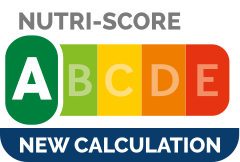 Very good nutritional quality
Nutri-Score data warning
Nutrient levels
Fat in low quantity (0.5%)
Saturated fat in low quantity (0.1%)
Sugars in low quantity (4.9%)
Salt in low quantity (0.15%)
Nutrition label

Nutrition facts
| Nutrition facts | As sold for 100 g / 100 ml | Compared to: Low-fat yogurts |
|---|---|---|
| Energy | 200 kJ (47 kcal) | 252.261 kJ (60 kcal) (-21%) |
| Fat | 0.5 g | 0.685 g (-27%) |
| Saturated fat | 0.1 g | 0.407 g (-75%) |
| Carbohydrates | 6.8 g | 8.17 g (-17%) |
| Sugars | 4.9 g | 7.299 g (-33%) |
| Dietary fiber | 0 g | ? |
| Proteins | 4.3 g | 4.715 g (-9%) |
| Salt | 0.15 g | 0.132 g (+14%) |
| Sodium | 0.06 g | 0.053 g (+13%) |
| Fruits, vegetables and legumes | ~ 1 % | ? |
Nutrition facts (Detailed data)
| Nutrition facts | As sold for 100 g / 100 ml | As sold Per 100 g (packaging) | As sold Per 100 g (estimate) |
|---|---|---|---|
| Energy | 200 kJ (47 kcal) | 200 kJ (47 kcal) | ? |
| Fat | 0.5 g | 0.5 g | ? |
| Saturated fat | 0.1 g | 0.1 g | ? |
| Carbohydrates | 6.8 g | 6.8 g | ? |
| Sugars | 4.9 g | 4.9 g | ? |
| Dietary fiber | 0 g | 0 g | ? |
| Proteins | 4.3 g | 4.3 g | ? |
| Salt | 0.15 g | 0.15 g | ? |
| Sodium | 0.06 g | 0.06 g | ? |
| Fruits, vegetables and legumes | ~ 1 % | ? | ~ 1 % |
Ingredients
Ingredients list
Ingredient information
Allergens
Ingredients analysis
Palm oil content unknown
Unrecognized: fr:skimmed-milk, fr:cereals-and-muesli-preparation, fr:water, fr:rye, fr:wheat, fr:modified-corn-starch, fr:hazelnut, fr:almonds, fr:stabilizers, fr:carrageenan, fr:guar-gum, fr:locust-bean-gum, fr:acidity-regulator, fr:sweeteners, fr:acesulfame-k-and-sucralose, fr:milk-protein-powder, fr:bifidobacteries-and-other-lactic-starters
Vegan status unknown
Unrecognized: fr:skimmed-milk, fr:water, fr:rye, fr:wheat, fr:modified-corn-starch, fr:hazelnut, fr:almonds, fr:carrageenan, fr:guar-gum, fr:locust-bean-gum, fr:acesulfame-k-and-sucralose, fr:milk-protein-powder, fr:bifidobacteries-and-other-lactic-starters
Vegetarian status unknown
Unrecognized: fr:skimmed-milk, fr:water, fr:rye, fr:wheat, fr:modified-corn-starch, fr:hazelnut, fr:almonds, fr:carrageenan, fr:guar-gum, fr:locust-bean-gum, fr:acesulfame-k-and-sucralose, fr:milk-protein-powder, fr:bifidobacteries-and-other-lactic-starters
Food Processing
NOVA group
 Ultra-processed food and drink products
Elements that indicate the product is in NOVA group 4
How NOVA works
Additives
E330 - Citric acidAntioxidantSequestrant
Citric acid is a natural organic acid found in citrus fruits such as lemons, oranges, and limes.
It is widely used in the food industry as a flavor enhancer, acidulant, and preservative due to its tart and refreshing taste.
Citric acid is safe for consumption when used in moderation and is considered a generally recognized as safe (GRAS) food additive by regulatory agencies worldwide.
E407 - Carrageenan EFSA overexposure risk: highCarrierEmulsifierHumectantStabiliserThickener
Carrageenan (E407), derived from red seaweed, is widely employed in the food industry as a gelling, thickening, and stabilizing agent, notably in dairy and meat products.
It can exist in various forms, each imparting distinct textural properties to food.
However, its degraded form, often referred to as poligeenan, has raised health concerns due to its potential inflammatory effects and its classification as a possible human carcinogen (Group 2B) by the International Agency for Research on Cancer (IARC).
Nevertheless, food-grade carrageenan has been deemed safe by various regulatory bodies when consumed in amounts typically found in food.
E410 - Locust bean gumEmulsifierStabiliserThickener
Locust bean gum (LBG, also known as carob gum, carob bean gum, carobin, E410) is a thickening agent and a gelling agent used in food technology.
E412 - Guar gumEmulsifierStabiliserThickener
Guar gum (E412) is a natural food additive derived from guar beans.
This white, odorless powder is valued for its remarkable thickening and stabilizing properties, making it a common ingredient in various food products, including sauces, dressings, and ice creams.
When used in moderation, guar gum is considered safe for consumption, with no known adverse health effects.
E950 - Acesulfame kSweetener
Acesulfame potassium ( AY-see-SUL-faym), also known as acesulfame K (K is the symbol for potassium) or Ace K, is a calorie-free sugar substitute (artificial sweetener) often marketed under the trade names Sunett and Sweet One. In the European Union, it is known under the E number (additive code) E950. It was discovered accidentally in 1967 by German chemist Karl Clauss at Hoechst AG (now Nutrinova). In chemical structure, acesulfame potassium is the potassium salt of 6-methyl-1,2,3-oxathiazine-4(3H)-one 2,2-dioxide. It is a white crystalline powder with molecular formula C4H4KNO4S and a molecular weight of 201.24 g/mol.
Environment
Green-Score, origins bonus, and transportation impact are shown for Worldwide .
Green Score
Overall grade
 Low environmental impact
About Green-Score
Current scope
Life cycle analysis
Average impact of the category
 Yogurt, fermented milk or dairy specialty, plain • Score: 91/100
Life-cycle reference
Overall environmental impact by stage (PEF)
The overall environmental impact figure (PEF) comes from ADEME's Agribalyse database, for the category: Yogurt, fermented milk or dairy specialty, plain. Source: ADEME Agribalyse Database.
| Stage | Impact |
|---|---|
| Agriculture | 51.4 % |
| Processing | 15.5 % |
| Packaging | 17.2 % |
| Transportation | 9.6 % |
| Distribution | 4.9 % |
| Consumption | 1.4 % |
Bonuses and maluses
Declared origins
Packaging impact
Green-Score for this product
Green-Score for this product
Final score: 71/100Final score breakdown
Carbon footprint
Carbon footprint
Climate impact by stage (CO2e)
The carbon emission figure comes from ADEME's Agribalyse database, for the category: Yogurt, fermented milk or dairy specialty, plain. Source: ADEME Agribalyse Database.
| Stage | Impact |
|---|---|
| Agriculture | 54.5 % |
| Processing | 8.0 % |
| Packaging | 22.3 % |
| Transportation | 13.1 % |
| Distribution | 2.0 % |
| Consumption | 0.4 % |
Packaging
Packaging impact
Data precision
Transportation
Declared origins
Forest footprint
Forest footprint
Deforestation risk details
Additional information
- Conservation conditions
- À consommer jusqu'au / N° lot : voir sur l'opercule. Keep refrigerated between 1º C and 8º C
Data Source
Product data comes from Open Food Facts. Food Benchmark also adds translations, category comparisons and explanatory calculations.
The database is licensed under ODbL 1.0, individual contents under DbCL 1.0, and product photos under CC BY-SA 3.0.
Product added on July 30, 2019 at 12:20:34 PM UTC by moon-rabbit .
Last edit on March 11, 2026 at 7:44:13 AM UTC by foodless .
Product page also edited by diegolasheras, elcoco, foodless, kiliweb, moon-rabbit, musarana, new-nutrition-bot, openfoodfacts-contributors, org-carrefour, roboto-app, tacite-mass-editor, teolemon, thaialagata, yuka.AZdjAvmkD9YgDMf33LAPgQWVBLvDD8BCPSYvow, yuka.BLtlOMbWHMcEAPHJzt9twDOJKb76LMJoMmQ0og, yuka.FJ59EvG6I_0eHd3WirIpjWXgS9_bBOFbI25Uog, yuka.IIFwJeWaQPMQMPfjgIMQwTuAC-XZHsZXJEJRow, yuka.K596BN6bDs8uAfTOzt4r8iGHPcXPKu1pB1cUoQ, yuka.KolYIeWXL5ETA8rswdIPhRa5Gr_CP85FMngJog, yuka.PZ1BNvOmA9N9F8Xe79IS2hLhKuPELa5GO04Pog, yuka.PepMHvuVAsUCON_R8pkP_zGYKujFEuVAMkwdog, yuka.YjRNcUQ2UUN1cUV1cGNKZ296RFcrdGg2L28ySlgwcTJOZkZMSVE9PQ, yuka.sY2b0xO6T85zoF3NwEKvll1HWoSDv2PoKEPSp0-XxNOzMq3SReFyx43mD6s.
Source List
- carrefour