

Amora Mayonnaise Nature Flacon Souple
Health
Nutrition
Nutri-Score
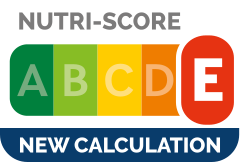 Lower nutritional quality
Nutri-Score data warning
Nutrient levels
Fat in high quantity (70%)
Saturated fat in high quantity (6.3%)
Sugars in low quantity (1.4%)
Salt in high quantity (1.8%)
Nutrition label

Nutrition facts
| Nutrition facts | As sold for 100 g / 100 ml | Compared to: Dijon mayonnaises |
|---|---|---|
| Energy | 2713 kJ (651 kcal) | 2,693.633 kJ (651 kcal) (+1%) |
| Fat | 70 g | 70.805 g (-1%) |
| Saturated fat | 6.3 g | 6.192 g (+2%) |
| Monounsaturated fat | 37.6 g | 36.429 g (+3%) |
| Polyunsaturated fat | 25.3 g | 23.989 g (+5%) |
| Carbohydrates | 2 g | 2.189 g (-9%) |
| Sugars | 1.4 g | 1.406 g (~0%) |
| Dietary fiber | 0.6 g | ? |
| Proteins | 1.2 g | 1.372 g (-13%) |
| Salt | 1.8 g | 1.494 g (+20%) |
| Sodium | 0.72 g | 0.598 g (+20%) |
| Fruits, vegetables and legumes | ~ 0 % | ? |
Nutrition facts (Detailed data)
| Nutrition facts | As sold for 100 g / 100 ml | As sold Per 100 g (packaging) | As sold Per 100 g (estimate) |
|---|---|---|---|
| Energy | 2713 kJ (651 kcal) | 2713 kJ (651 kcal) | ? |
| Fat | 70 g | 70 g | ? |
| Saturated fat | 6.3 g | 6.3 g | ? |
| Monounsaturated fat | 37.6 g | 37.6 g | ? |
| Polyunsaturated fat | 25.3 g | 25.3 g | ? |
| Carbohydrates | 2 g | 2 g | ? |
| Sugars | 1.4 g | 1.4 g | ? |
| Dietary fiber | 0.6 g | 0.6 g | ? |
| Proteins | 1.2 g | 1.2 g | ? |
| Salt | 1.8 g | 1.8 g | ? |
| Sodium | 0.72 g | 0.72 g | ? |
| Fruits, vegetables and legumes | ~ 0 % | ? | ~ 0 % |
Serving size
Ingredients
Ingredients image

Ingredients list
Ingredient information
Added sugars
Allergens
Ingredients analysis
No ingredients containing palm oil.
Contains non-vegan ingredients.
Vegetarian status unknown
Food Processing
NOVA group
 Ultra-processed food and drink products
Elements that indicate the product is in NOVA group 4
How NOVA works
Additives
E1400 - DextrinCarrierEmulsifierStabiliserThickener
Dextrins are a group of low-molecular-weight carbohydrates produced by the hydrolysis of starch or glycogen. Dextrins are mixtures of polymers of D-glucose units linked by α-(1→4) or α-(1→6) glycosidic bonds. Dextrins can be produced from starch using enzymes like amylases, as during digestion in the human body and during malting and mashing, or by applying dry heat under acidic conditions (pyrolysis or roasting). The latter process is used industrially, and also occurs on the surface of bread during the baking process, contributing to flavor, color and crispness. Dextrins produced by heat are also known as pyrodextrins. The starch hydrolyses during roasting under acidic conditions, and short-chained starch parts partially rebranch with α-(1,6) bonds to the degraded starch molecule. See also Maillard Reaction. Dextrins are white, yellow, or brown powders that are partially or fully water-soluble, yielding optically active solutions of low viscosity. Most of them can be detected with iodine solution, giving a red coloration; one distinguishes erythrodextrin (dextrin that colours red) and achrodextrin (giving no colour). White and yellow dextrins from starch roasted with little or no acid are called British gum.
E160c - Paprika extractColour
No additive description is available yet.
E161b - LuteinColour
LUTEIN is a xanthophyll and one of 600 known naturally occurring carotenoids. Lutein is extracted from the petals of African marigold (Tagetes erecta). It is approved for use in the EU and Australia and New Zealand. In the United States lutein may not be used as a food coloring for foods intended for human consumption, but can be added to animal feed.
E415 - Xanthan gumEmulsifierStabiliserThickener
Xanthan gum (E415) is a natural polysaccharide derived from fermented sugars, often used in the food industry as a thickening and stabilizing agent.
This versatile food additive enhances texture and prevents ingredient separation in a wide range of products, including salad dressings, sauces, and gluten-free baked goods.
It is considered safe for consumption even at high intake amounts.
Environment
Green-Score, origins bonus, and transportation impact are shown for Worldwide .
Green Score
Overall grade
 High environmental impact
About Green-Score
Current scope
Life cycle analysis
Average impact of the category
 Mayonnaise (70% fat and more) • Score: 57/100
Life-cycle reference
Overall environmental impact by stage (PEF)
The overall environmental impact figure (PEF) comes from ADEME's Agribalyse database, for the category: Mayonnaise (70% fat and more). Source: ADEME Agribalyse Database.
| Stage | Impact |
|---|---|
| Agriculture | 67.0 % |
| Processing | 11.0 % |
| Packaging | 13.6 % |
| Transportation | 5.6 % |
| Distribution | 2.2 % |
| Consumption | 0.6 % |
Bonuses and maluses
Origins of ingredients
Packaging impact
Green-Score for this product
Green-Score for this product
Final score: 42/100Final score breakdown
Carbon footprint
Carbon footprint
Climate impact by stage (CO2e)
The carbon emission figure comes from ADEME's Agribalyse database, for the category: Mayonnaise (70% fat and more). Source: ADEME Agribalyse Database.
| Stage | Impact |
|---|---|
| Agriculture | 58.4 % |
| Processing | 11.8 % |
| Packaging | 15.4 % |
| Transportation | 12.2 % |
| Distribution | 1.8 % |
| Consumption | 0.3 % |
Packaging
Packaging impact
Packaging components
| Shape | Material | Recycling | Impact |
|---|---|---|---|
| Bottle | Plastic | Unknown | High |
Declared packaging
Transportation
Origins of ingredients
Origins breakdown
| Origin | Percent of ingredients | Impact |
|---|---|---|
| Unknown | 95 % | High |
| France | 5 % | High |
Forest footprint
Forest footprint
Ingredients linked to forest pressure
| Ingredient | Type | Percent in product | Forest footprint |
|---|---|---|---|
| Free Range Chicken EGG Yolk | Oeufs standards | 5.10 % | 0.00 |
Additional information
- Preparation
- OPERCULE PRATIQUE : 1. DÉVISSEZ LE BOUCHON 2. ÔTEZ L'OPERCULE
- Conservation conditions
- À conserver entre 2°C et 25°C
- Customer service
- Amora Relation Consommateurs Unilever France, 20 rue des Deux Gares 92842 Rueil-Malmaison Cedex
Data Source
Product data comes from Open Food Facts. Food Benchmark also adds translations, category comparisons and explanatory calculations.
The database is licensed under ODbL 1.0, individual contents under DbCL 1.0, and product photos under CC BY-SA 3.0.
Product added on May 11, 2013 at 9:08:04 AM UTC by openfoodfacts-contributors .
Last edit on March 13, 2026 at 3:16:29 PM UTC by new-nutrition-bot .
Product page also edited by kiliweb, manu1400, mbe, new-nutrition-bot, oc84, openfoodfacts-contributors, org-unilever-france-gms, packbot, quechoisir, yuka.VEw0N1RZazYvS0VZby9jWXBpLyt3ZEI4eUphSUJFR1ROOVV6SUE9PQ, yuka.VjVBRElZVWlvTjBQcHNVWDJDenI1dHdzN1phelFUeUxGTEF1SVE9PQ.
Source List
- unilever-france-gms