

Amul cheese
Health
Nutrition
Nutri-Score
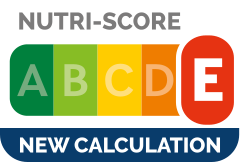 Lower nutritional quality
Nutri-Score data warning
Nutrient levels
Fat in high quantity (28%)
Saturated fat in high quantity (16%)
Sugars in low quantity (0%)
Salt in high quantity (3.5%)
Nutrition label

Nutrition facts
| Nutrition facts | As sold for 100 g / 100 ml | Compared to: Cheeses |
|---|---|---|
| Energy | ~ 1376 kJ (320 kcal) | 1,325.325 kJ (319 kcal) (+4%) |
| Fat | 28 g | 25.426 g (+10%) |
| Saturated fat | 16 g | 16.711 g (-4%) |
| Cholesterol | 0.07 g | 25.368 mg (+176%) |
| Carbohydrates | 0 g | 1.6 g (-100%) |
| Sugars | 0 g | 0.91 g (-100%) |
| Dietary fiber | 0 g | ? |
| Proteins | 20 g | 20.086 g (~0%) |
| Salt | 3.5 g | 1.388 g (+152%) |
| Sodium | 1.4 g | 0.555 g (+152%) |
| Vitamin A | 0.000000051 g | 40.862 µg (-100%) |
| Calcium | 0.000343 g | 293.129 mg (-100%) |
| Fruits, vegetables and legumes | ~ 0 % | ? |
Nutrition facts (Detailed data)
| Nutrition facts | As sold for 100 g / 100 ml | As sold Per 100 g (packaging) | As sold Per 100 g (estimate) |
|---|---|---|---|
| Energy | ~ 1376 kJ (320 kcal) | ? (320 kcal) | ? |
| Fat | 28 g | 28 g | ? |
| Saturated fat | 16 g | 16 g | ? |
| Cholesterol | 0.07 g | 0.07 g | ? |
| Carbohydrates | 0 g | 0 g | ? |
| Sugars | 0 g | 0 g | ? |
| Dietary fiber | 0 g | 0 g | ? |
| Proteins | 20 g | 20 g | ? |
| Salt | 3.5 g | 3.5 g | ? |
| Sodium | 1.4 g | 1.4 g | ? |
| Vitamin A | 0.000000051 g | 0.000000051 g | ? |
| Calcium | 0.000343 g | 0.000343 g | ? |
| Fruits, vegetables and legumes | ~ 0 % | ? | ~ 0 % |
Serving size
Ingredients
Ingredients image

Ingredients list
Ingredient information
Allergens
Ingredients analysis
Palm oil content unknown
Unrecognized: en:452, en:339, en:331, en:iodized-sait, en:class-ii-preservatives, en:200, en:234
Contains non-vegan ingredients.
Unrecognized: en:452, en:339, en:331, en:iodized-sait, en:200, en:234
Vegetarian status unknown
Unrecognized: en:452, en:339, en:331, en:iodized-sait, en:200, en:234
Food Processing
NOVA group
 Ultra-processed food and drink products
Elements that indicate the product is in NOVA group 4
How NOVA works
Additives
E200 - Sorbic acid EFSA overexposure risk: highPreservative
SORBIC ACID, or 2,4-hexadienoic acid, is a natural organic compound used as a food preservative. It has the chemical formula CH3(CH)4CO2H.
E234 - NisinPreservative
Nisin is a polycyclic antibacterial peptide produced by the bacterium Lactococcus lactis that is used as a food preservative. It has 34 amino acid residues, including the uncommon amino acids lanthionine (Lan), methyllanthionine (MeLan), didehydroalanine (Dha), and didehydroaminobutyric acid (Dhb). These unusual amino acids are introduced by posttranslational modification of the precursor peptide. In these reactions a ribosomally synthesized 57-mer is converted to the final peptide. The unsaturated amino acids originate from serine and threonine, and the enzyme-catalysed addition of cysteine residues to the didehydro amino acids result in the multiple (5) thioether bridges. Subtilin and epidermin are related to nisin. All are members of a class of molecules known as lantibiotics. In the food industry, nisin is obtained from the culturing of L. lactis on natural substrates, such as milk or dextrose, and it is not chemically synthesized. It was originally isolated in the late 1930s, and produced since the 1950s as Nisaplin from naturally occurring sources by Aplin and Barrett in laboratories in Beaminster in Dorset, and approved as an additive for food use in the USA in the late 1960s, although the Beaminster factory now is owned by DuPont.
E331 - Sodium citratesEmulsifierSequestrantStabiliser
DISODIUM CITRATE, more properly, disodium hydrogen citrate, is an acid salt of citric acid with the chemical formula Na2C6H6O7. It is used as an antioxidant in food and to improve the effects of other antioxidants. It is also used as an acidity regulator and sequestrant. Typical products include gelatin, jam, sweets, ice cream, carbonated beverages, milk powder, wine, and processed cheeses.
E339 - Sodium phosphates EFSA overexposure risk: highEmulsifierHumectantPreservativeSequestrantStabiliserThickener
TRISODIUM PHOSPHATE is the inorganic compound with the chemical formula Na3PO4.
E452 - Polyphosphates EFSA overexposure risk: highEmulsifierHumectantSequestrantStabiliserThickener
No additive description is available yet.
Environment
Green-Score, origins bonus, and transportation impact are shown for Worldwide .
Green Score
Overall grade
 High environmental impact
About Green-Score
Current scope
Life cycle analysis
Average impact of the category
 Camembert cheese, from cow's milk • Score: 54/100
Life-cycle reference
Overall environmental impact by stage (PEF)
The overall environmental impact figure (PEF) comes from ADEME's Agribalyse database, for the category: Camembert cheese, from cow's milk. Source: ADEME Agribalyse Database.
| Stage | Impact |
|---|---|
| Agriculture | 84.7 % |
| Processing | 5.0 % |
| Packaging | 4.0 % |
| Transportation | 3.7 % |
| Distribution | 1.9 % |
| Consumption | 0.5 % |
Bonuses and maluses
Origins of ingredients
Packaging impact
Green-Score for this product
Green-Score for this product
Final score: 38/100Final score breakdown
Carbon footprint
Carbon footprint
Climate impact by stage (CO2e)
The carbon emission figure comes from ADEME's Agribalyse database, for the category: Camembert cheese, from cow's milk. Source: ADEME Agribalyse Database.
| Stage | Impact |
|---|---|
| Agriculture | 86.0 % |
| Processing | 4.3 % |
| Packaging | 4.1 % |
| Transportation | 4.8 % |
| Distribution | 0.7 % |
| Consumption | 0.1 % |
Packaging

Packaging impact
Packaging components
| Shape | Material | Recycling | Impact |
|---|---|---|---|
| 1 Unknown | Cardboard | Unknown | Low |
| 8 Unknown | Plastic Aluminium | Unknown | High |
Declared packaging
Data precision
Transportation
Manufacturing locations
Origins of ingredients
Origins breakdown
| Origin | Percent of ingredients | Impact |
|---|---|---|
| India | 100 % | High |
Data Source
Product data comes from Open Food Facts. Food Benchmark also adds translations, category comparisons and explanatory calculations.
The database is licensed under ODbL 1.0, individual contents under DbCL 1.0, and product photos under CC BY-SA 3.0.
Product added on May 27, 2018 at 9:50:32 PM UTC by demonshreder .
Last edit on March 7, 2026 at 2:23:37 AM UTC by astroray .
Product page also edited by astroray, demonshreder, halal-food, kiliweb, mrudultora, mudskipper875, omkarchend1kar, packbot, yuka.sY2b0xO6T85zoF3NwEKvllRHbdGPsxXqJjr5wEqZ1MaJJZLlR9ZgsrDVI6g.