

kopiko blanca 52g
Health
Nutrition
Nutri-Score
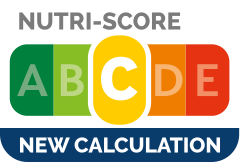 Average nutritional quality
Nutrition label

Nutrition facts
| Nutrition facts | Prepared for 100 g / 100 ml | Compared to: Creamer |
|---|---|---|
| Energy | 1931.07692307692 kJ (461 kcal) | 1,075.086 kJ (265 kcal) (+80%) |
| Fat | 19.2307692307692 g | 11.841 g (+62%) |
| Saturated fat | 11.5384615384615 g | 6.818 g (+69%) |
| Carbohydrates | 73.0769230769231 g | 32.445 g (+125%) |
| Sugars | 50 g | 21.266 g (+135%) |
| Dietary fiber | ? | ? |
| Proteins | 3.84615384615385 g | 0.728 g (+428%) |
| Salt | 0.576923076923077 g | 0.206 g (+180%) |
| Sodium | 0.230769230769231 g | 0.082 g (+181%) |
| Fruits, vegetables and legumes | ? | ? |
Nutrition facts (Detailed data)
| Nutrition facts | Prepared for 100 g / 100 ml | Prepared Per serving (26 g) (packaging) | As sold Per serving (26 g) (packaging) | As sold Per 100 g (estimate) |
|---|---|---|---|---|
| Energy | 1931.07692307692 kJ (461 kcal) | 502.08 kJ (120 kcal) | 502.08 kJ (120 kcal) | ? |
| Fat | 19.2307692307692 g | 5 g | 5 g | ? |
| Saturated fat | 11.5384615384615 g | 3 g | 3 g | ? |
| Carbohydrates | 73.0769230769231 g | 19 g | 19 g | ? |
| Sugars | 50 g | 13 g | 13 g | ? |
| Dietary fiber | ? | ? | 0 g | ? |
| Proteins | 3.84615384615385 g | 1 g | 1 g | ? |
| Salt | 0.576923076923077 g | 0.15 g | 0.15 g | ? |
| Sodium | 0.230769230769231 g | 0.06 g | 0.06 g | ? |
| Fruits, vegetables and legumes | ? | ? | ? | ~ 0 % |
Serving size
Ingredients
Ingredients list
Ingredient information
Added sugars
Allergens
Ingredients analysis
Palm oil content unknown
Contains non-vegan ingredients.
Unrecognized: en:non-dairy-creamer
Vegetarian status unknown
Unrecognized: en:non-dairy-creamer
Food Processing
NOVA group
 Ultra-processed food and drink products
Elements that indicate the product is in NOVA group 4
How NOVA works
Additives
E340 - Potassium phosphates EFSA overexposure risk: highEmulsifierHumectantSequestrantStabiliserThickener
Potassium phosphate is a generic term for the salts of potassium and phosphate ions including: Monopotassium phosphate (KH2PO4) (Molar mass approx: 136 g/mol) Dipotassium phosphate (K2HPO4) (Molar mass approx: 174 g/mol) Tripotassium phosphate (K3PO4) (Molar mass approx: 212.27 g/mol)As food additives, potassium phosphates have the E number E340.
E340ii - Dipotassium phosphateEmulsifierHumectantSequestrantStabiliserThickener
No additive description is available yet.
E452 - Polyphosphates EFSA overexposure risk: highEmulsifierHumectantSequestrantStabiliserThickener
No additive description is available yet.
E452i - Sodium polyphosphateEmulsifierHumectantSequestrantStabiliserThickener
No additive description is available yet.
E481 - Sodium stearoyl-2-lactylate EFSA overexposure risk: highEmulsifierStabiliser
Sodium stearoyl-2-lactylate (sodium stearoyl lactylate or SSL) is a versatile, FDA approved food additive used to improve the mix tolerance and volume of processed foods. It is one type of a commercially available lactylate. SSL is non-toxic, biodegradable, and typically manufactured using biorenewable feedstocks. Because SSL is a safe and highly effective food additive, it is used in a wide variety of products ranging from baked goods and desserts to pet foods.As described by the Food Chemicals Codex 7th edition, SSL is a cream-colored powder or brittle solid. SSL is currently manufactured by the esterification of stearic acid with lactic acid and partially neutralized with either food-grade soda ash (sodium carbonate) or caustic soda (concentrated sodium hydroxide). Commercial grade SSL is a mixture of sodium salts of stearoyl lactylic acids and minor proportions of other sodium salts of related acids. The HLB for SSL is 10-12. SSL is slightly hygroscopic, soluble in ethanol and in hot oil or fat, and dispersible in warm water. These properties are the reason that SSL is an excellent emulsifier for fat-in-water emulsions and can also function as a humectant.
E551 - Silicon dioxideCarrier
Silicon dioxide, also known as silica, silicic acid or silicic acid anydride is an oxide of silicon with the chemical formula SiO2, most commonly found in nature as quartz and in various living organisms. In many parts of the world, silica is the major constituent of sand. Silica is one of the most complex and most abundant families of materials, existing as a compound of several minerals and as synthetic product. Notable examples include fused quartz, fumed silica, silica gel, and aerogels. It is used in structural materials, microelectronics (as an electrical insulator), and as components in the food and pharmaceutical industries. Inhaling finely divided crystalline silica is toxic and can lead to severe inflammation of the lung tissue, silicosis, bronchitis, lung cancer, and systemic autoimmune diseases, such as lupus and rheumatoid arthritis. Uptake of amorphous silicon dioxide, in high doses, leads to non-permanent short-term inflammation, where all effects heal.
E955 - SucraloseSweetener
Sucralose is an artificial sweetener and sugar substitute. The majority of ingested sucralose is not broken down by the body, so it is noncaloric. In the European Union, it is also known under the E number E955. It is produced by chlorination of sucrose. Sucralose is about 320 to 1,000 times sweeter than sucrose, three times as sweet as both aspartame and acesulfame potassium, and twice as sweet as sodium saccharin. Evidence of benefit is lacking for long-term weight loss with some data supporting weight gain and heart disease risks.It is stable under heat and over a broad range of pH conditions. Therefore, it can be used in baking or in products that require a long shelf life. The commercial success of sucralose-based products stems from its favorable comparison to other low-calorie sweeteners in terms of taste, stability, and safety. Common brand names of sucralose-based sweeteners are Splenda, Zerocal, Sukrana, SucraPlus, Candys, Cukren, and Nevella. Canderel Yellow also contains sucralose, but the original Canderel and Green Canderel do not.
Environment
Green-Score, origins bonus, and transportation impact are shown for Worldwide .
Green Score
Overall grade
 Unknown environmental impact
About Green-Score
Current scope
Green-Score availability
Bonuses and maluses
Origins of ingredients
Packaging impact
Packaging
Packaging impact
Declared packaging
Data precision
Transportation
Manufacturing locations
Origins of ingredients
Origins breakdown
| Origin | Percent of ingredients | Impact |
|---|---|---|
| Indonesia | 100 % | High |
Forest footprint
Forest footprint
Deforestation risk details
Data Source
Product data comes from Open Food Facts. Food Benchmark also adds translations, category comparisons and explanatory calculations.
The database is licensed under ODbL 1.0, individual contents under DbCL 1.0, and product photos under CC BY-SA 3.0.
Product added on September 21, 2019 at 3:01:06 AM UTC by hochelaga .
Last edit on March 5, 2026 at 3:31:18 PM UTC by foodless .
Product page also edited by abootsieko1030, benbenben, foodless, hochelaga, kiliweb, mazhii, openfoodfacts-contributors, roboto-app, sebleouf, yuka.sY2b0xO6T85zoF3NwEKvllNDYtWCnQ7AGBbVxFC0yIaSLJj2UIhbvI3UL6g.