

RedBull zero
Health
Nutrition
Nutri-Score
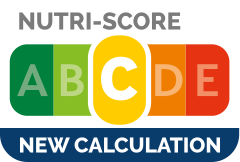 Average nutritional quality
Nutri-Score data warning
Nutrient levels
Fat in low quantity (0%)
Saturated fat in low quantity (0%)
Sugars in low quantity (0%)
Salt in low quantity (0.02%)
Nutrition label

Nutrition facts
| Nutrition facts | As sold for 100 g / 100 ml | Compared to: Functional drinks |
|---|---|---|
| Energy | 9 kJ (2 kcal) | 104.774 kJ (25 kcal) (-91%) |
| Fat | 0 g | 0.024 g (-100%) |
| Saturated fat | 0 g | 0.008 g (-100%) |
| Carbohydrates | 0 g | 5.763 g (-100%) |
| Sugars | 0 g | 5.351 g (-100%) |
| Dietary fiber | 0 g | ? |
| Proteins | 0 g | 0.075 g (-100%) |
| Salt | 0.02 g | 0.106 g (-81%) |
| Sodium | 0.008 g | 0.042 g (-81%) |
| Vitamin B6 | 0.002 g | ? |
| Vitamin B12 | 0.000002 g | ? |
| Pantothenic acid | 0.002 g | ? |
| Fruits, vegetables and legumes | ? | ? |
Nutrition facts (Detailed data)
| Nutrition facts | As sold for 100 g / 100 ml | As sold Per serving (legacy) |
|---|---|---|
| Energy | 9 kJ (2 kcal) | 11.2 kJ (2 kcal) |
| Fat | 0 g | 0 g |
| Saturated fat | 0 g | 0 g |
| Carbohydrates | 0 g | 0 g |
| Sugars | 0 g | 0 g |
| Dietary fiber | 0 g | 0 g |
| Proteins | 0 g | 0 g |
| Salt | 0.02 g | 0.025 g |
| Sodium | 0.008 g | 0.01 g |
| Vitamin B6 | 0.002 g | 0.0025 g |
| Vitamin B12 | 0.000002 g | 0.0000025 g |
| Pantothenic acid | 0.002 g | 0.0025 g |
| Fruits, vegetables and legumes | ? | ? |
Serving size
Ingredients
Ingredients image

Ingredients list
Ingredient information
Ingredients analysis
No ingredients containing palm oil.
Unrecognized: de:riboflavine
Vegan status unknown
Unrecognized: de:riboflavine
Vegetarian status unknown
Unrecognized: de:riboflavine
Food Processing
NOVA group
 Ultra-processed food and drink products
Elements that indicate the product is in NOVA group 4
How NOVA works
Additives
E101 - RiboflavinColour
Riboflavin, also known as vitamin B2, is a vitamin found in food and used as a dietary supplement. Food sources include eggs, green vegetables, milk and other dairy product, meat, mushrooms, and almonds. Some countries require its addition to grains. As a supplement it is used to prevent and treat riboflavin deficiency and prevent migraines. It may be given by mouth or injection.It is nearly always well tolerated. Normal doses are safe during pregnancy. Riboflavin is in the vitamin B group. It is required by the body for cellular respiration.Riboflavin was discovered in 1920, isolated in 1933, and first made in 1935. It is on the World Health Organization's List of Essential Medicines, the most effective and safe medicines needed in a health system. Riboflavin is available as a generic medication and over the counter. In the United States a month of supplements costs less than 25 USD.
E150a - Plain caramel EFSA overexposure risk: noColour
Caramel color or caramel coloring is a water-soluble food coloring.
E270 - Lactic acid
LACTIC ACID is an organic compound with the formula CH3CH(OH)CO2H. In the form of its conjugate base called lactate (this is thus different and kept as a separate ingredient). Lactic acid is chiral, consisting of two optical isomers. One is known as L-(+)-lactic acid or (S)-lactic acid and the other, its mirror image, is D-(−)-lactic acid or (R)-lactic acid in food the L-variant is used
E290 - Carbon dioxidePreservativePropellent Gas
CARBON DIOXIDE chemical formula CO2) is a colorless gas with a density about 60% higher than that of dry air.
E296 - Malic acid
MALIC ACID is an organic compound with the molecular formula C4H6O5. Malic acid has two stereoisomeric forms (L- and D-enantiomers), though only the L-isomer exists naturally.
E330 - Citric acidAntioxidantSequestrant
Citric acid is a natural organic acid found in citrus fruits such as lemons, oranges, and limes.
It is widely used in the food industry as a flavor enhancer, acidulant, and preservative due to its tart and refreshing taste.
Citric acid is safe for consumption when used in moderation and is considered a generally recognized as safe (GRAS) food additive by regulatory agencies worldwide.
E415 - Xanthan gumEmulsifierStabiliserThickener
Xanthan gum (E415) is a natural polysaccharide derived from fermented sugars, often used in the food industry as a thickening and stabilizing agent.
This versatile food additive enhances texture and prevents ingredient separation in a wide range of products, including salad dressings, sauces, and gluten-free baked goods.
It is considered safe for consumption even at high intake amounts.
E500 - Sodium carbonatesStabiliserThickener
Sodium carbonates (E500) are compounds commonly used in food preparation as leavening agents, helping baked goods rise by releasing carbon dioxide when they interact with acids.
Often found in baking soda, they regulate the pH of food, preventing it from becoming too acidic or too alkaline. In the culinary world, sodium carbonates can also enhance the texture and structure of foods, such as noodles, by modifying the gluten network.
Generally recognized as safe, sodium carbonates are non-toxic when consumed in typical amounts found in food.
E504 - Magnesium carbonatesCarrier
MAGNESIUM CARBONATE, MgCO3 (archaic name magnesia alba), is an inorganic salt that is a white solid.
E952 - Cyclamic acid and its Na and Ca saltsSweetener
Cyclamic acid is a compound with formula C6H13NO3S. It is included in E number "E952". Cyclamic acid is mainly used as catalyst in the production of paints and plastics, and furthermore as a reagent for laboratory usage.The sodium and calcium salts of cyclamic acid are used as artificial sweeteners under the name cyclamate.
E954 - saccharin and its saltsSweetener
Sodium saccharin (benzoic sulfimide) is an artificial sweetener with effectively no food energy. It is about 300–400 times as sweet as sucrose but has a bitter or metallic aftertaste, especially at high concentrations. Saccharin is used to sweeten products such as drinks, candies, cookies, and medicines.
E955 - SucraloseSweetener
Sucralose is an artificial sweetener and sugar substitute. The majority of ingested sucralose is not broken down by the body, so it is noncaloric. In the European Union, it is also known under the E number E955. It is produced by chlorination of sucrose. Sucralose is about 320 to 1,000 times sweeter than sucrose, three times as sweet as both aspartame and acesulfame potassium, and twice as sweet as sodium saccharin. Evidence of benefit is lacking for long-term weight loss with some data supporting weight gain and heart disease risks.It is stable under heat and over a broad range of pH conditions. Therefore, it can be used in baking or in products that require a long shelf life. The commercial success of sucralose-based products stems from its favorable comparison to other low-calorie sweeteners in terms of taste, stability, and safety. Common brand names of sucralose-based sweeteners are Splenda, Zerocal, Sukrana, SucraPlus, Candys, Cukren, and Nevella. Canderel Yellow also contains sucralose, but the original Canderel and Green Canderel do not.
E968 - ErythritolHumectantSweetener
Erythritol ((2R,3S)-butane-1,2,3,4-tetrol) is a sugar alcohol (or polyol) that has been approved for use as a food additive in the United States and throughout much of the world. It was discovered in 1848 by Scottish chemist John Stenhouse. It occurs naturally in some fruit and fermented foods. At the industrial level, it is produced from glucose by fermentation with a yeast, Moniliella pollinis. Erythritol is 60–70% as sweet as sucrose (table sugar) yet it is almost noncaloric, does not affect blood sugar, does not cause tooth decay, and is partially absorbed by the body, excreted in urine and feces. Under U.S. Food and Drug Administration (FDA) labeling requirements, it has a caloric value of 0.2 kilocalories per gram (95% less than sugar and other carbohydrates), though nutritional labeling varies from country to country. Some countries, such as Japan and the United States, label it as zero-calorie; the European Union labels it 0 kcal/g.
Environment
Green-Score, origins bonus, and transportation impact are shown for Worldwide .
Green Score
Overall grade
About Green-Score
Current scope
Green-Score availability
Bonuses and maluses
Origins of ingredients
Packaging impact
Packaging
Packaging impact
Packaging materials
| Material | % | Packaging weight | Packaging weight per 100 g of product |
|---|---|---|---|
| Metal | 100 % | ||
| Total | 100 % |
Packaging components
| Shape | Material | Recycling | Impact |
|---|---|---|---|
| 1 CAN | Metal | Recycle | High |
Data precision
Transportation
Origins of ingredients
Origins breakdown
| Origin | Percent of ingredients | Impact |
|---|---|---|
| Germany | 100 % | Medium |
Forest footprint
Forest footprint
Deforestation risk details
Data Source
Product data comes from Open Food Facts. Food Benchmark also adds translations, category comparisons and explanatory calculations.
The database is licensed under ODbL 1.0, individual contents under DbCL 1.0, and product photos under CC BY-SA 3.0.
Product added on August 12, 2018 at 9:10:14 AM UTC by openfoodfacts-contributors .
Last edit on August 13, 2025 at 2:17:06 PM UTC by seppl .
Product page also edited by halal-app-chakib, intolerapp, itatest, kiliweb, maxine-mann, nutrinutri, openfoodfacts-contributors, prepperapp, roboto-app, seppl, smoothie-app, yuka.V2JzWU5QazlqL3NGeDg4d3dVcjB5L0JQd00rb0RVMkpMZE14SUE9PQ, yuka.sY2b0xO6T85zoF3NwEKvllZpAsLAjhiZCEP4t2-P-NWONZf1cIgr8IvXGas, yuka.sY2b0xO6T85zoF3NwEKvlmVIVfndmRnGZw3Vw1aw-f6pDse0SMld6YPVGKo.